What healthcare organisations should look for when selecting a specialist cleaning partner
In healthcare environments, cleaning is about far more than presentation. Medical and healthcare cleaning services play an important role in supporting infection prevention, patient and staff safety, regulatory requirements and consistently high standards across hospitals, medical centres, specialist clinics and other healthcare facilities.
That places greater demands on the cleaning provider.
The right medical and healthcare cleaning service provider needs experienced people, clearly defined procedures, effective quality controls and the capability to operate within complex, sensitive and highly regulated environments.
So, what should healthcare organisations consider when choosing a cleaning partner?
Why specialist cleaning matters in healthcare environments
Healthcare facilities present cleaning challenges that differ significantly from those of conventional commercial environments.
Patient areas, consulting and treatment rooms, bathrooms, waiting areas, staff facilities and high-touch surfaces can all have different cleaning and disinfection requirements. Cleaning teams may also need to work around patients, clinical staff, visitors and changing operational demands.
A specialist healthcare cleaning provider should understand these requirements and develop sitespecific cleaning programs that reflect the facility, its risk profile and its operating environment.
Supporting infection prevention and control
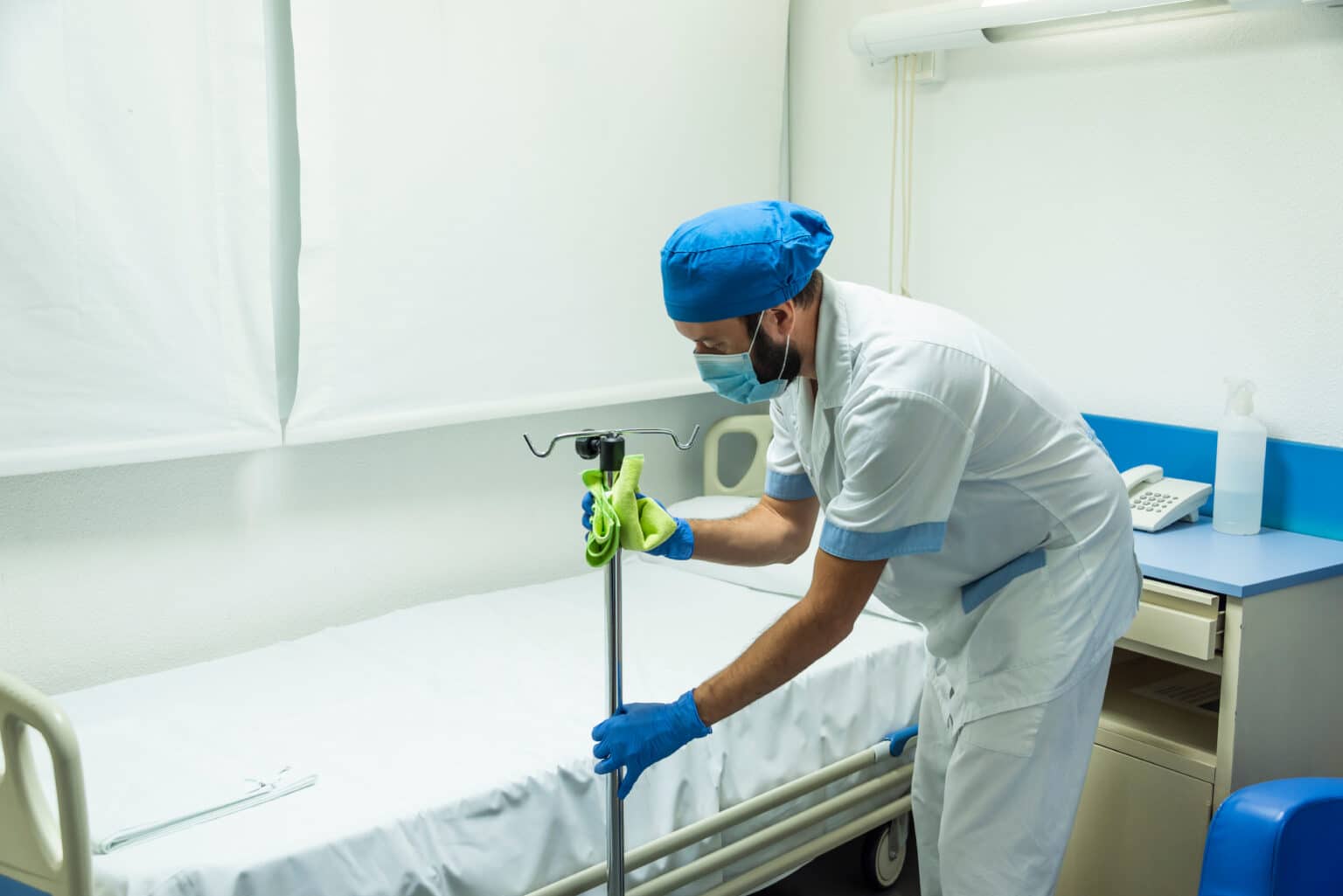
Effective environmental cleaning is an important component of infection prevention and control.
Cleaning programs should clearly define the methods, frequencies and responsibilities for different areas of a facility, with particular attention given to high-touch surfaces and areas with increased risk.
Cleaning teams also need to understand the importance of following established procedures consistently, including the correct use of cleaning products, equipment and personal protective equipment.
For healthcare organisations, this makes the experience, training and supervision of the cleaning team particularly important.
1. Look for proven medical and healthcare cleaning experience
Healthcare cleaning requires an understanding of environments where hygiene, safety, privacy and continuity of operations are critical.
When assessing a provider, look beyond general commercial cleaning experience.
Consider whether the organisation has experience working within medical and healthcare environments and whether it understands the operational demands associated with these facilities.
A provider should be able to demonstrate how it develops cleaning programs around individual sites rather than applying the same approach to every environment.
Relevant experience also helps cleaning teams understand how to operate appropriately around patients, staff and visitors while maintaining required cleaning standards.
2. Understand how cleaning teams are trained and supported
A cleaning program is only as effective as the people delivering it.
Healthcare organisations should understand how a prospective provider recruits, trains, supervises and supports its cleaning teams.
This includes appropriate induction and site-specific training, an understanding of cleaning and infection-control procedures, safe work practices and clear expectations around service standards.
Ongoing supervision is equally important.
There should be clear responsibility for monitoring performance, addressing issues and ensuring agreed procedures continue to be followed after the initial mobilisation period.
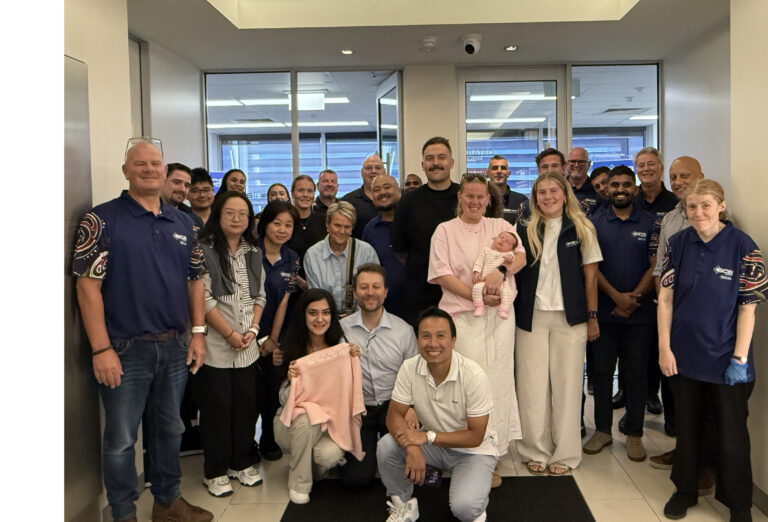
For SCS Group, investing in our people is part of a broader commitment to creating a supported, capable workforce. You can read more about our people and culture.
3. Ask about quality management and accountability
Quality shouldn’t rely solely on whether someone notices that something hasn’t been cleaned.
A specialist provider should have structured processes for monitoring service delivery, undertaking quality inspections, reporting results and addressing issues when they arise.
For procurement teams, this provides greater confidence that cleaning standards can be measured and managed over the life of the contract.
It is also worth considering the management systems and certifications supporting the provider’s operations.
SCS Group maintains Triple ISO Certified management systems across ISO 9001 Quality Management, ISO 14001 Environmental Management and ISO 45001 Occupational Health & Safety.
These internationally recognised standards provide structured frameworks supporting quality, environmental responsibility, workplace health and safety and continuous improvement.
4. Look for a cleaning program tailored to your facility
Every medical and healthcare facility is different.
A hospital, medical centre, specialist clinic or allied health facility can have very different operating hours, patient movements, treatment areas, risk profiles and cleaning requirements.
The cleaning scope should reflect those differences.
A prospective provider should take the time to understand the facility before recommending a solution, including cleaning frequencies, priority areas, staffing requirements, periodical services and any site specific requirements.
This approach helps create a cleaning program that is both effective and practical for the environment in
which it operates.
5. Consider the technology supporting service delivery
Technology can provide procurement and facility teams with greater visibility over how a cleaning contract is performing.
Depending on the service model, this can include digital quality inspections, reporting, issue management, rostering and monitoring of service delivery.
The important question isn’t simply whether a provider has technology. It is how that technology improves the service.
At SCS Group, our Smart Connect technology supports communication, quality management and visibility across cleaning operations, helping our teams and clients monitor performance, identify issues and maintain accountability.
Technology should support the relationship between the client and cleaning provider rather than make that relationship more complicated.
6. Consider communication and responsiveness
Healthcare environments don’t always operate according to a predictable routine.
Requirements can change, issues can arise and cleaning priorities may need to be adjusted quickly. That makes communication and responsiveness an important part of the service.
Look for clear account management structures and understand who will be responsible for the relationship once the contract begins.
A good cleaning partner should be accessible, accountable and able to respond when circumstances change – not simply deliver against a fixed scope of works.
7. Ask for evidence of experience and performance
Claims of expertise should be supported by evidence.
Ask prospective providers about relevant healthcare experience, client references, case studies and examples of comparable facilities or portfolios they support.
References can provide valuable insight into areas that aren’t always evident in a tender response, including responsiveness, communication, consistency and how effectively the provider manages issues.
For larger or multi-site healthcare organisations, it is also worth establishing whether the provider has the operational scale and management structure to maintain consistent standards across multiple locations.
8. Look beyond the lowest price
Cost will always be an important consideration in procurement, but the lowest price doesn’t necessarily represent the best value.
A cleaning proposal should be assessed against the service model supporting it.
Consider staffing, supervision, training, equipment, quality management, account management, technology and the provider’s ability to deliver the required standard consistently.
An unrealistically low price can create pressure elsewhere in the service model and may ultimately affect quality or consistency.
The objective should be to find a solution that delivers value, transparency and sustainable service delivery over the life of the contract.
Choosing the right cleaning partner
Selecting a medical and healthcare cleaning service provider requires consideration of more than cleaning tasks alone.
Experience, trained people, infection prevention and control, quality systems, technology, communication and the ability to adapt to the requirements of individual healthcare environments all contribute to successful service delivery.
The right provider should also be a partner that is straightforward to work with – responsive when circumstances change, accountable when an issue needs attention and committed to maintaining consistent standards.
Taking the time to assess these areas during the procurement process can help healthcare organisations make a more informed decision and establish a cleaning partnership capable of supporting their facility over the longer term.
Hygiene standards your patients rely on
SCS Group cleans medical and healthcare facilities to documented hygiene standards, with Smart Connect reporting giving clear visibility of what has been delivered.
Frequently asked questions
What is medical and healthcare cleaning?
Medical and healthcare cleaning is specialist commercial cleaning undertaken in environments such as hospitals, medical centres, specialist clinics and allied health facilities.
Cleaning programs should reflect the requirements of the individual facility, with consideration given to hygiene, infection prevention and control, high-touch surfaces, patient and staff safety and the operational requirements of the site.
Why is specialist cleaning important in healthcare environments?
Healthcare facilities can present cleaning requirements and risks that differ from conventional commercial environments.
A specialist cleaning provider should understand these requirements and have experienced people, appropriate training, documented procedures and quality controls to support consistent cleaning across clinical and non-clinical environments.
What should I look for in a medical and healthcare cleaning service provider?
Look for demonstrated healthcare experience, trained and supported cleaning teams, structured quality and safety systems, appropriate infection-control procedures, clear account management and technology that provides visibility over service delivery.
Relevant certifications, client references and experience with comparable facilities or portfolios should also form part of the assessment.
How should a healthcare cleaning program be developed?
A healthcare cleaning program should be tailored to the individual facility rather than based on a standardised approach.
Factors including the type of facility, clinical and non-clinical areas, operating hours, patient and visitor activity, risk profile, cleaning frequencies and site-specific requirements should help inform the scope of works and service model.
How can technology support medical and healthcare cleaning?
Technology can provide greater visibility over cleaning operations through digital quality inspections, reporting, issue management, rostering and service monitoring.
The objective should be to make it easier for both the client and cleaning provider to identify issues, monitor performance and maintain accountability.
SCS Group’s Smart Connect platform supports technologyenabled service delivery and greater operational visibility.
What certifications should a commercial cleaning provider have?
Organisations should consider certifications relevant to quality management, environmental management and workplace health and safety as part of their procurement and due-diligence processes.
SCS Group’s management systems are certified to ISO 9001, ISO 14001 and ISO 45001, supporting a structured approach to quality, environmental responsibility, health and safety and continuous improvement.
What questions should I ask when comparing healthcare cleaning providers?
Ask about the provider’s experience in comparable medical and healthcare environments, how cleaning teams are trained and supervised, their approach to infection prevention and quality assurance, how performance is measured and reported, who will manage your account and how issues or changing requirements will be handled.
For larger organisations, also consider whether the provider has the people, systems and operational structure required to support multiple facilities consistently.
Medical and healthcare cleaning expertise
With more than 17 years’ experience in commercial cleaning and integrated services, SCS Group supports organisations across Australia and New Zealand with structured, accountable cleaning solutions.
Our approach combines experienced people, dedicated account management, Triple ISO Certified management systems and technology that provides greater visibility over service delivery.
For medical and healthcare organisations, cleaning programs are developed around the requirements of the individual facility, its operating environment and agreed service standards.